Seeds of Survival
A Hiroshima Ginkgo for Chesterfield County Arboretum’s Courthouse Green
"The surviving trees of the atomic bombing are a reminder that war affects us all. It will be a living monument for peace."
A Package from Hiroshima, by Way of California
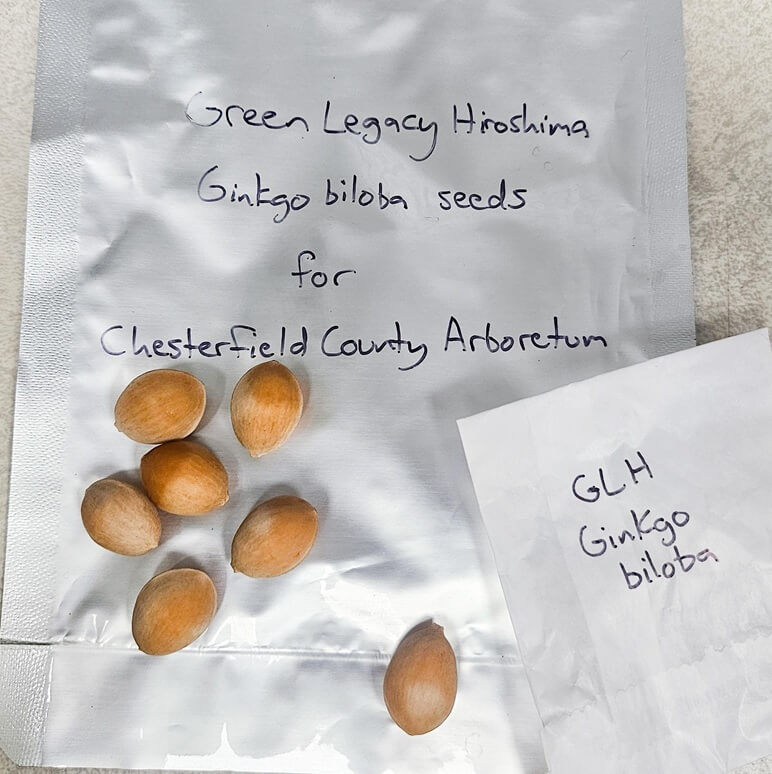
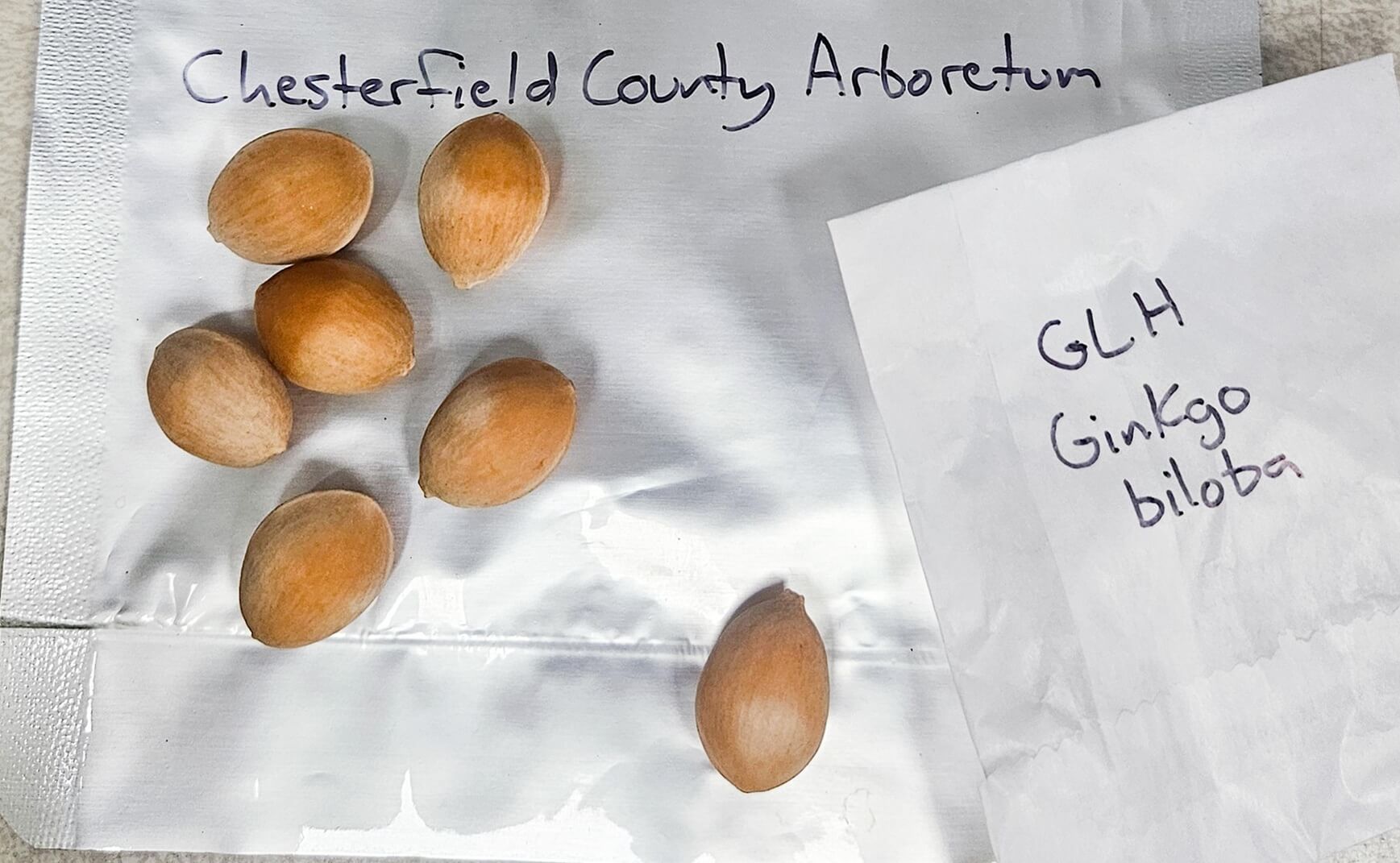
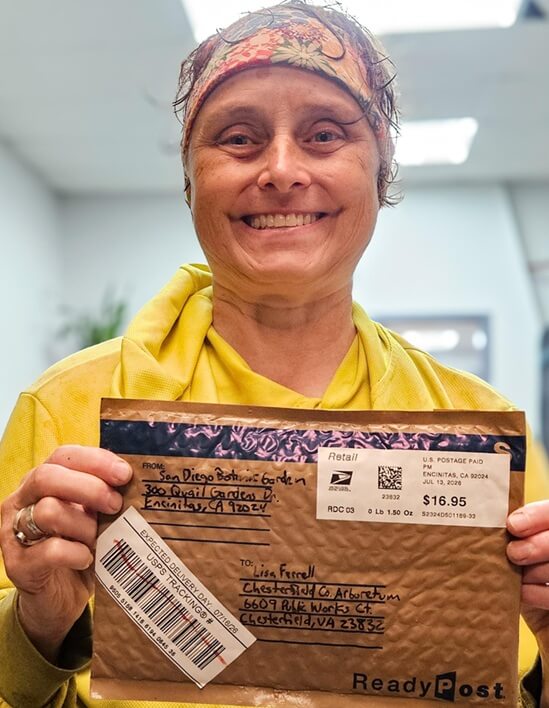
On July 16, 2026, a padded envelope arrived at the Chesterfield County Arboretum in Chesterfield, Virginia. Inside was a foil packet labeled: “Green Legacy Hiroshima — Ginkgo biloba seeds for Chesterfield County Arboretum.”
The path to this package began with a webinar on December 17, 2025, titled “A Year Among the Trees,” featuring Green Legacy Hiroshima. Watching was Lisa Ferrel, an ISA Certified Arborist and ISA Certified Urban Forest Professional with an ISA Tree Risk Assessment Qualification, a certified horticulturist through the Virginia Nursery and Landscape Association, and a 19-year veteran of Chesterfield County. There she learned that the San Diego Botanic Garden serves as a regional hub for the organization’s seed distribution, and she contacted them to request Ginkgo biloba seeds.
Hibakujumoku refers to trees that survived the atomic bombings of Hiroshima and Nagasaki in 1945. Six of these were Ginkgo biloba trees. Though survivors feared nothing would grow for decades, trees within a two‑kilometer (1.24 mile) radius of the hypocenter endured the blast and later regenerated, becoming symbols of resilience and peace.
Green Legacy Hiroshima, founded by Nassrine Azimi and Tomoko Watanabe with support from UNITAR, safeguards and shares seeds from these survivor trees. Their mission blends environmental stewardship with peace education, partnering with institutions in 32 countries and regions.
A Living Monument on the Courthouse Green
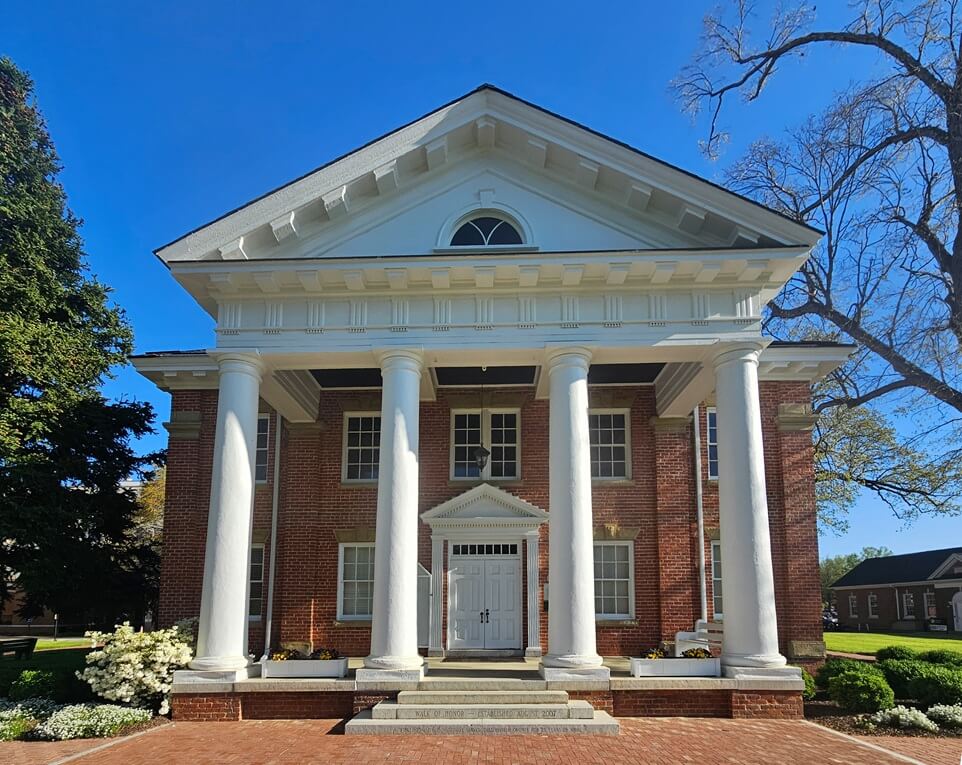
The plan for the seeds is a patient one. On July 21, 2026, they were placed in a moist growing medium for 90 days of cold stratification to break dormancy. After germination, the seedlings will be potted and placed in a grow tent until ready to be moved outside, and only then planted on the 1917 Historic Courthouse Green. That placement is the point. A memorial plaque asks to be read once; a tree asks to be visited, season after season, by people not yet born when it was planted. The Arboretum — set on the county’s 580-acre government complex and ArbNet accredited since 2019 — is thinking in exactly those timescales. For Ferrel, receiving the seeds carried special meaning: as an arborist, she felt that creating a living memorial to peace would give the community a beautiful, tangible connection to trees and their resilience.
A Tree That Can Tell Its Own Story
Green Legacy Hiroshima asks its partners not only to plant a tree but to share the story and significance of the survivor trees — to become, in their words, ambassadors of Hiroshima’s peace message. A ginkgo on a courthouse lawn cannot do this alone; without its story, it is simply a beautiful tree.
The Arboretum uses the Plantsoon platform to educate visitors about the plants in its collection, and sharing knowledge is exactly what Plantsoon is designed for. The ginkgo’s Flora page — including its origin, purpose, and early photographs — is already public, accessible to anyone: a visitor to the Arboretum, a teacher planning a lesson, or a passerby who wonders about the tree. Connecting people with nature in an urban environment is the Arboretum’s stated aim — and a tree with its story attached keeps doing that work when no one is there to tell it.
Read the ginkgo’s story in Plantsoon.