
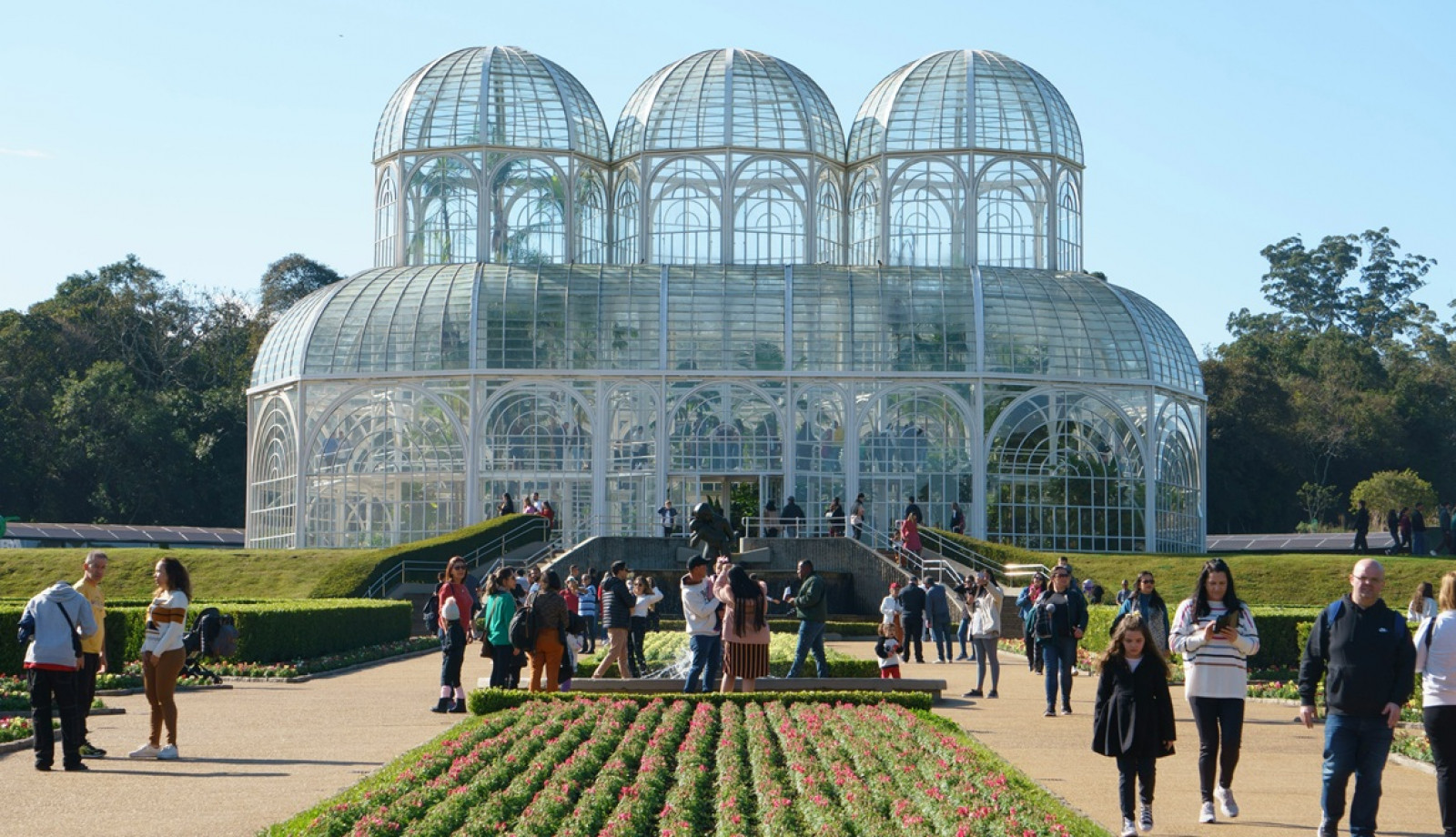
A day's admissions ledger flatters to deceive. It records a visitor as a single line: one ticket, one entry, one afternoon's spend. Treated that way, every visitor is worth the price of one visit. But some of those visitors will come back — next season, next year, for a decade — and some will bring their friends. What, then, is a returning visitor actually worth? Almost certainly a great deal more than the ledger says.
The one-visit illusion
Most green spaces are, understandably, organised around attracting visits. Marketing budgets chase new faces; success is counted at the gate. The trouble with counting only visits is that it treats a first-time stranger and a devoted annual returner as identical — each a single admission — when their value to the place could hardly be more different. The returner will come again and again; the stranger may never come back at all. Valuing them the same is an accounting convenience, not an economic truth.
The compounding value of coming back
The business world learned this lesson decades ago, and learned it in numbers. In a landmark analysis for Harvard Business Review, Reichheld and Sasser examined the profitability of customers across their whole relationship with a company and found that keeping them was startlingly valuable: reducing the rate at which customers defected by just five per cent raised profits by between twenty-five and eighty-five per cent across the service businesses they studied.¹ The gains came not from any single transaction but from the compounding of a long relationship — a retained customer buys again, costs less to serve, and, over time, becomes a source of referrals.¹
A garden is not a bank, and those exact figures belong to the industries studied, not to an arboretum. But the underlying mechanism is general: value that accrues over a relationship dwarfs the value of a one-off. A visitor who returns for ten years is not simply ten single visits stacked up — once the cost of first attracting them is behind you, each subsequent visit is won far more cheaply than the first.
It is often repeated that winning a new customer costs several times more than keeping an existing one. The precise multiplier is disputed and probably unknowable, so it is best not treated as a hard figure — but the direction is not seriously in doubt: reaching someone who already knows and values your garden costs less than reaching a stranger who does not.
In gardens, experience makes the returner
If returning visitors are this valuable, the practical question is what produces them — and here the garden-specific research is both clear and slightly counter-intuitive. Studying the quality of gardens tourism, Shapoval, Rivera and Croes found that the quality of the visitor experience predicted both satisfaction and the intention to return, and that first-time and repeat visitors evaluate a place differently — so earning the second visit is a distinct task from winning the first.² A returning visitor is, in effect, manufactured by the quality of the last visit.
And that quality is not chiefly a matter of information. In a study of botanic-garden visitors, Díaz-Meneses and Amador-Marrero found that both satisfaction and loyalty rested on emotion and the senses rather than on the facts the garden supplied.³ The lever that produces a returning visitor is not what the place explained; it is what it made them feel.
The second payoff: the visitors they bring
The worth of a returning visitor does not stop at their own repeat visits. It extends to everyone they persuade to come. In that same botanic-garden study, loyalty was defined not only as the intention to return but as the intention to recommend — the two travel together.³ A loyal visitor is, almost by definition, an advocate.
This matters economically because recommendation is the cheapest way an attraction grows. In later work, Reichheld found that across most industries he studied, the share of customers enthusiastic enough to recommend a business to a friend tracked its growth rate more closely than conventional satisfaction scores did.⁴ (The single-number version of that claim has its critics, but the underlying link between enthusiastic advocates and growth is well attested.) A recommendation is marketing a garden does not pay for, delivered by someone the listener already trusts. Every returning visitor is therefore a potential channel — and the most cost-effective one a green space has.
A returning visitor is not one ticket. They are a stream of future visits, plus the visitors their recommendations bring.
What one returning visitor is really worth
Add these together and the opening question comes into focus. The real worth of a returning visitor is not the price of one admission. It is the sum of every future visit they will make, plus the visits made by the people they bring, minus the near-zero cost of reaching someone who already loves the place. For a garden with any seasonal draw, that sum can run to many times a single ticket. The returner is the most valuable line on the ledger — and the one the ledger, counting only today's admissions, never shows.
Earning the return
None of this argues against attracting new visitors; a garden needs a first visit before it can have a second. It argues for valuing the second visit properly, and designing deliberately for it. A green space that changes with the seasons gives a reason to return; one that engages the senses and the emotions gives a reason to feel; one that is genuinely worth talking about gives a reason to recommend. Each is an investment in the most under-counted asset a garden has: the visitor who was going to come back anyway, and bring a friend.
Count your admissions, by all means. But do not mistake a day's gate for a visitor's worth. The number that matters is not how many came today, but how many will come again — and how many they will bring.
Sources
- 1. Reichheld FF, Sasser WE Jr. Zero defections: quality comes to services. Harvard Business Review. 1990;68(5):105–111. [management article] Available from: https://hbr.org/1990/09/zero-defections-quality-comes-to-services
- 2. Shapoval V, Rivera M, Croes R. The quality of gardens tourism and the visitor experience: differentiating between first time and repeat visitors. Annals of Leisure Research. 2021;24(4):449–467. Available from: https://www.tandfonline.com/doi/abs/10.1080/11745398.2020.1744174
- 3. Díaz-Meneses G, Amador-Marrero M. Visitor experience at Viera y Clavijo botanic garden: satisfaction and loyalty antecedents. Journal of Outdoor Recreation and Tourism. 2024;47:100778. Available from: https://www.sciencedirect.com/science/article/pii/S221307802400046X
- 4. Reichheld FF. The one number you need to grow. Harvard Business Review. 2003;81(12):46–54. [management article] Available from: https://hbr.org/2003/12/the-one-number-you-need-to-grow