
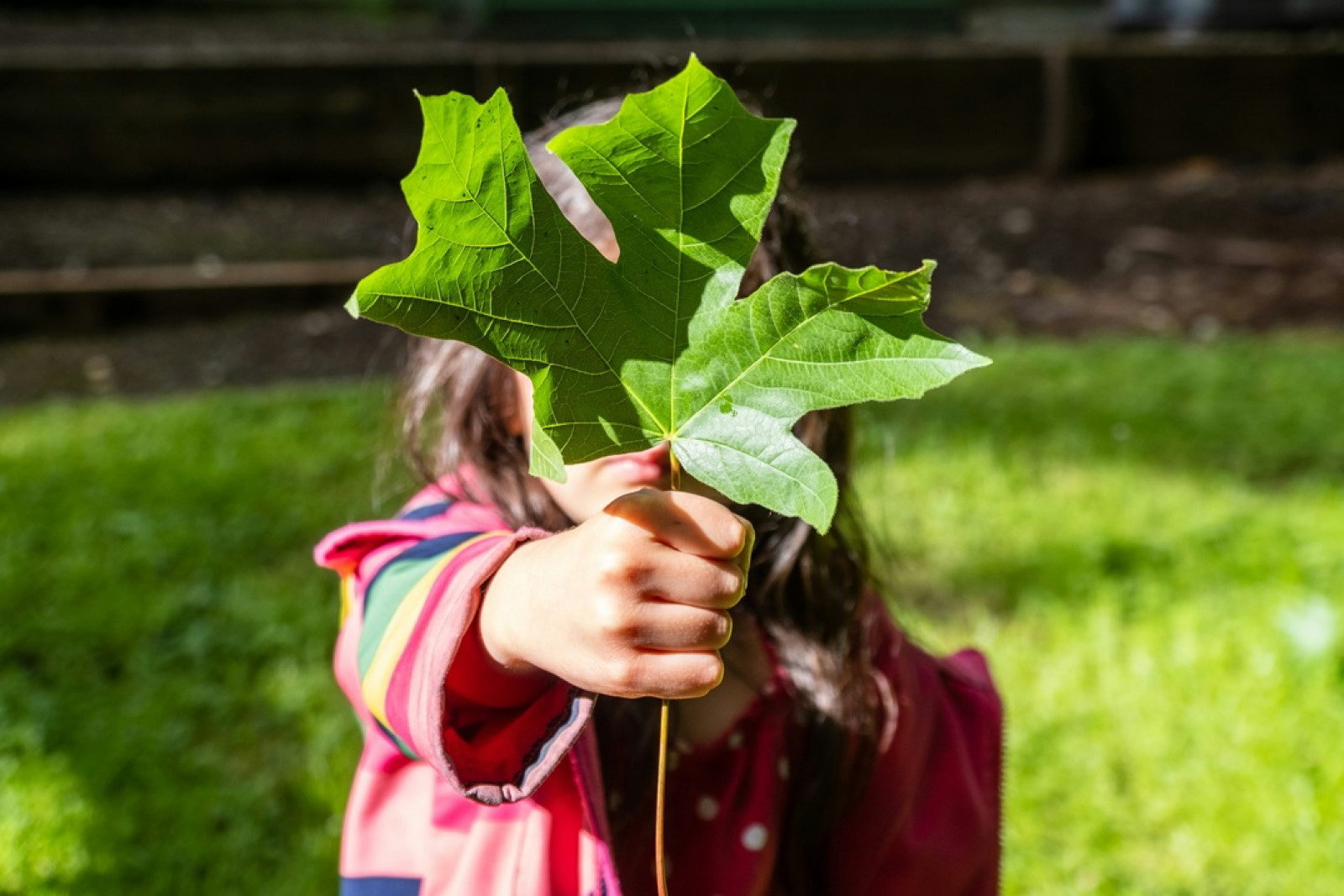
People notice animals far more readily than the plants around them. It is a familiar experience — the bird is seen, the hedge it sits in is not — and it has a name in the research literature. The botanist-educators James Wandersee and Elisabeth Schussler coined the term “plant blindness” in 1999 to describe two linked tendencies: the habit of not noticing plants in the environment, and a limited appreciation of the roles they play.¹ The term has since become widely used in biology-education research.
The interesting question for a school is not whether the gap exists, but whether it is fixed. The evidence suggests it is not.
A documented gap, not a fixed trait
How firmly is the pattern established? A 2022 review by Bethan Stagg and Justin Dillon examined 326 studies published between 1998 and 2020. Most found that people had more interest in, paid more attention to, and were more likely to remember information about animals than about plants.²
Crucially, the same review found no concrete evidence that this is an innate human characteristic. Instead, the diminished experience of nature typical of urbanised societies appeared to be the cause — and the pattern was not inevitable where people had regular contact with plants.² That distinction matters for educators: if plant blindness were hard-wired, schools could do little about it. Because it looks like a consequence of environment and experience, it becomes something teaching can address.
The research describes plant blindness as a consequence of reduced contact with plants — not a fixed feature of how children are built.
What the evidence says works
The central finding of the Stagg and Dillon review is in its title: plant awareness is linked to plant relevance. People notice and remember plants that matter to their lives. The authors conclude that the cyclical inattention to plants could be addressed through first-hand experiences of edible and useful plants in local environments.²
Two threads follow from the wider literature.
Relevant, first-hand contact. Frequent, direct interaction with plants that have a clear use or meaning is what the review associates with higher plant awareness — not the volume of information presented about them.²
Learning outdoors. A 2019 review of hundreds of studies concluded that experiences of nature boost academic learning, personal development and engagement, with benefits that were especially notable for students less well served by conventional classroom instruction.³
These reviews describe broad patterns across many studies; they are not a guaranteed recipe for any single classroom. But the direction is consistent: contact and relevance matter more than density of facts.
Where technology fits
There is reasonable scepticism about adding more screens to children’s education. A practice column in pediatric nursing makes a related point bluntly: environmental knowledge gathered only through screens or glass does not, on its own, build a meaningful relationship with the natural world.⁴
That caution shapes how we think technology should be used in schools. The argument is not that digital content replaces contact with plants, but that it can bring children to a real plant and add depth once they are there. A QR-coded label on a schoolyard tree is, in this framing, an invitation outdoors: the encounter happens in the real world, and the screen is an optional supplement — the history of the tree, a record of its seasonal change, an audio description for visitors who need one. This is consistent with the evidence that the benefit comes from the outdoor, nature-based experience itself, with the digital layer serving that experience rather than substituting for it.³
Two real examples
The Sint-Pietersinstituut in Turnhout, Belgium became the first school in Europe to achieve a Level 1 accreditation from ArbNet, the international network of arboreta. The recognition places the school alongside established Belgian collections including Ghent University and the arboreta of Wespelaar and Kalmthout.⁵
Only about two years earlier, the schoolyard — though it already held a notable collection of trees — was still largely a grey playground. It has since been transformed into a biodiverse green space. The physical redesign and planting were carried out by professionals, while students and teachers were closely involved in the planning, so the result reflected the school community’s own vision. A monumental Quercus palustris anchors the space, and several local apple and pear varieties link the trees to the region’s horticultural heritage.⁶
Digital documentation was part of the path to accreditation: the school worked with Plantsoon to map and label its plants, with QR-coded labels that pupils and visitors can scan. ArbNet Level 1 requires a documented living collection of at least 25 labelled woody species.⁵ ⁶
A very different school shows the same idea travels. Euphemia’s Arboretum at E.L. Haynes Public Charter School in Washington, D.C. — a Title I school serving more than 1,100 pupils from PreK to grade 12 — has earned the same ArbNet Level 1 accreditation. Its collection holds 160 trees and more than 50 woody species on and around campus, chosen to teach: native shade trees, fruiting trees such as pawpaw and serviceberry, and flowering cherries that nod to the city’s cherry-blossom heritage.⁷
The arboretum is built to be used. Digital maps, seasonal trails, bilingual plant labels and QR codes link each tree to lesson content, and as the collection grows pupils contribute their own photos, observations and data. As at the Sint-Pietersinstituut, the plants are documented digitally through Plantsoon, so the labels work as a teaching tool rather than a static sign.⁷
These are individual schools’ experiences, offered as worked examples rather than controlled studies. What they show is concrete: ordinary schools — a Belgian secondary school and an American PreK-12 Title I school alike — can work with their existing grounds to reach a recognised arboretum standard, and turn a schoolyard into a documented, teachable collection in the process.
Practical guidance for school leaders
For headteachers, biology coordinators or governance boards, a few principles follow from the evidence and from the Sint-Pieters example.
Favour sustained, relevant contact over a one-time installation. Since awareness is linked to frequent, relevant interaction, a small number of plants that pupils return to and use is likely to do more than a large display they pass once.²
Integrate across the curriculum. A project that depends on one enthusiastic teacher tends not to survive a staff change; work woven into several subjects is more durable.
Involve the pupils. Giving pupils a role in planting, documenting and describing specific plants builds the kind of first-hand, relevant contact the research associates with awareness.²
Measure what you can. A simple before-and-after check of which plants pupils can recognise turns a claim of impact into evidence. Without some measurement, impact remains intuition.
In closing
The case for plant-aware education does not rest on alarming statistics. It rests on a careful reading of the evidence: plant blindness is real and documented, but the research describes it as a consequence of reduced contact with plants rather than a fixed trait — and therefore as something schools can influence.¹ ²
Schools hold one of the few outdoor spaces children share every day. The evidence that nature-based experience supports learning, combined with the finding that relevance and first-hand contact drive plant awareness, points to a practical conclusion: the schoolyard is worth treating as a teaching tool, and modest, well-placed digital depth can extend what happens there.² ³ The Sint-Pietersinstituut and Euphemia’s Arboretum show how far this can go in very different school systems; most schools will start with something smaller. Either way, the direction the research supports is the same — bring children into regular, meaningful contact with the plants around them.
Sources
- 1. Wandersee JH, Schussler EE. Preventing plant blindness. The American Biology Teacher. 1999;61(2):82-6. Available from: https://online.ucpress.edu/abt/article/61/2/82/15933/Preventing-Plant-Blindness
- 2. Stagg BC, Dillon J. Plant awareness is linked to plant relevance: a review of educational and ethnobiological literature (1998-2020). Plants, People, Planet. 2022;4(6):579-92. Available from: https://nph.onlinelibrary.wiley.com/doi/full/10.1002/ppp3.10323
- 3. Kuo M, Barnes M, Jordan C. Do experiences with nature promote learning? Converging evidence of a cause-and-effect relationship. Frontiers in Psychology. 2019;10:305. Available from: https://www.frontiersin.org/journals/psychology/articles/10.3389/fpsyg.2019.00305/full
- 4. Driessnack M. Children and nature-deficit disorder [column]. Journal for Specialists in Pediatric Nursing. 2009;14(1):73-5. Available from: https://onlinelibrary.wiley.com/doi/full/10.1111/j.1744-6155.2009.00180.x
- 5. RTV. Sint-Pietersinstituut in Turnhout eerste Europese school met ArbNet-accreditatie [Internet]. Turnhout: RTV; 2025 [cited 2026 Jun 16]. Available from: https://www.rtv.be/actualiteit-en-nieuws/sint-pietersinstituut-turnhout-eerste-europese-school-met-arbnet-accreditatie
- 6. ArbNet. vzw KOBArT Sint-Pietersinstituut — Level I accredited arboretum [Internet]. Lisle (IL): The Morton Arboretum, Morton Register of Arboreta; [date unknown] [cited 2026 Jun 16]. Available from: https://arbnet.org/morton-register/vzw-kobart-sint-pietersinstituut/
- 7. ArbNet. Euphemia's Arboretum at E.L. Haynes Public Charter School — Level I accredited arboretum [Internet]. Lisle (IL): The Morton Arboretum, Morton Register of Arboreta; [date unknown] [cited 2026 Jun 16]. Available from: https://arbnet.org/morton-register/euphemia-arboretum-at-e-l-haynes-public-charter-school/