A name for those who no longer have one
How a Plantsoon QR label in Belgium gives an unknown woman a voice after 35 years.
"If even one person gets their name back, this will all have been worth it."
Thirty-five years without a name
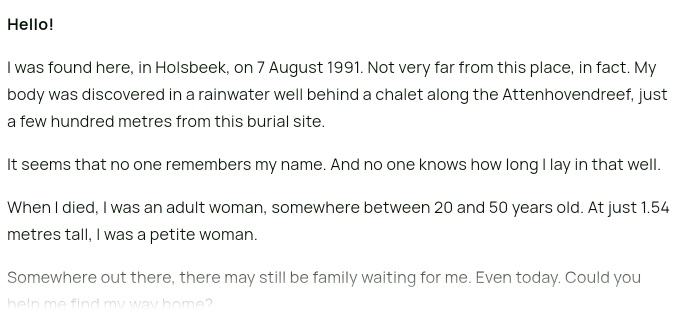
On August 6, 1991, the body of a woman was found in a rainwater well behind a cottage on a quiet forest road in Holsbeek, a town near Leuven, Belgium. She was small, about five feet tall, and wore a brown knitted cardigan over a T-shirt printed with surfers, palm trees and the words "sun, surf, sea." Nobody knew who she was. Nobody knows today.
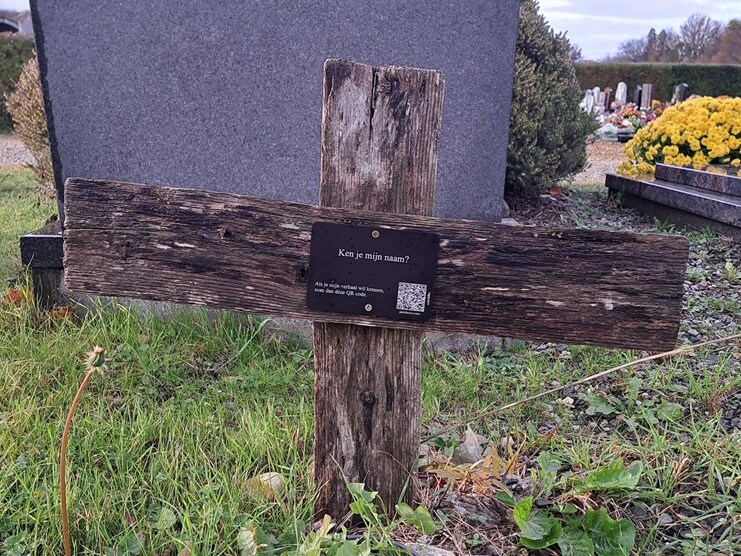
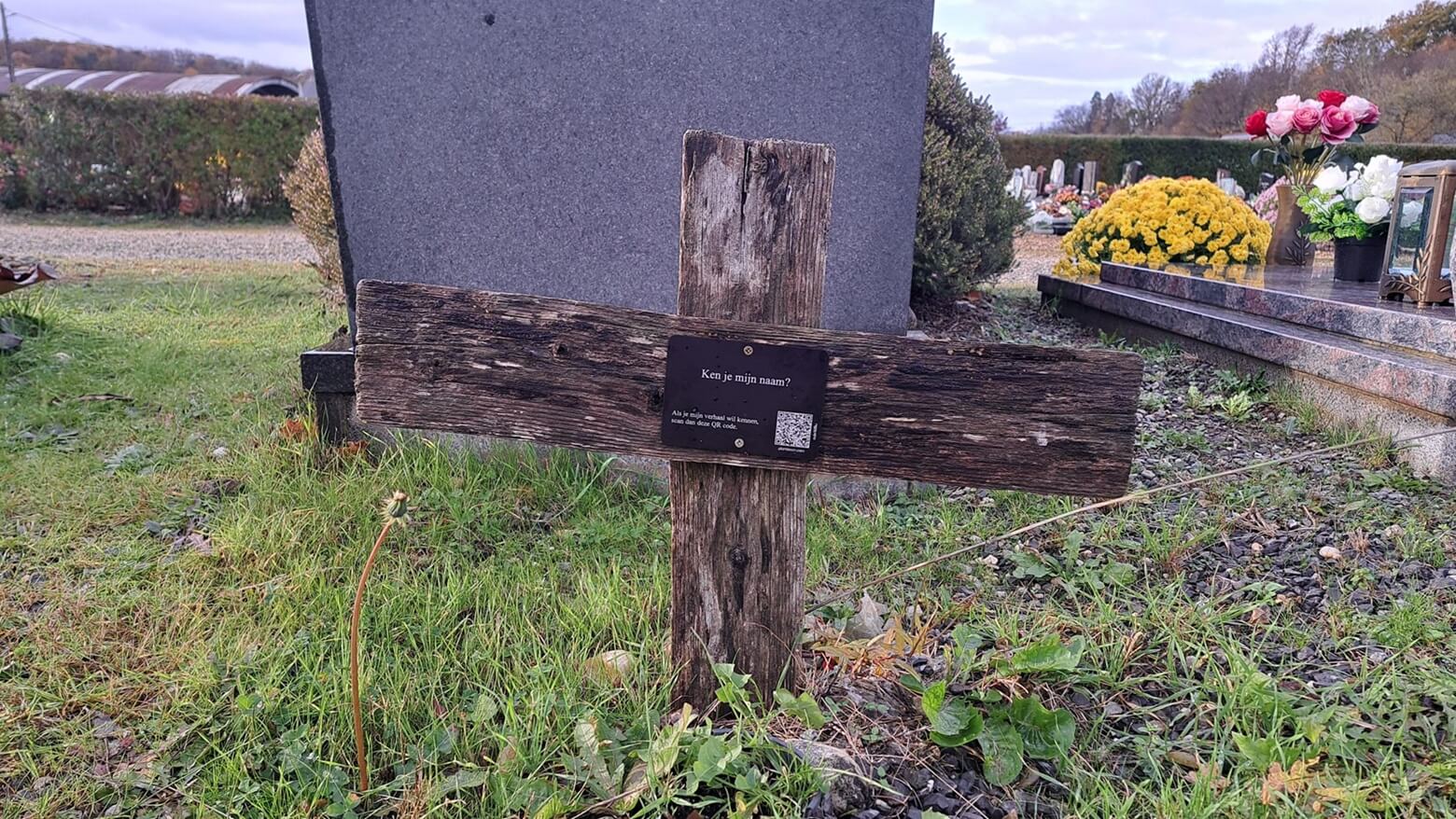
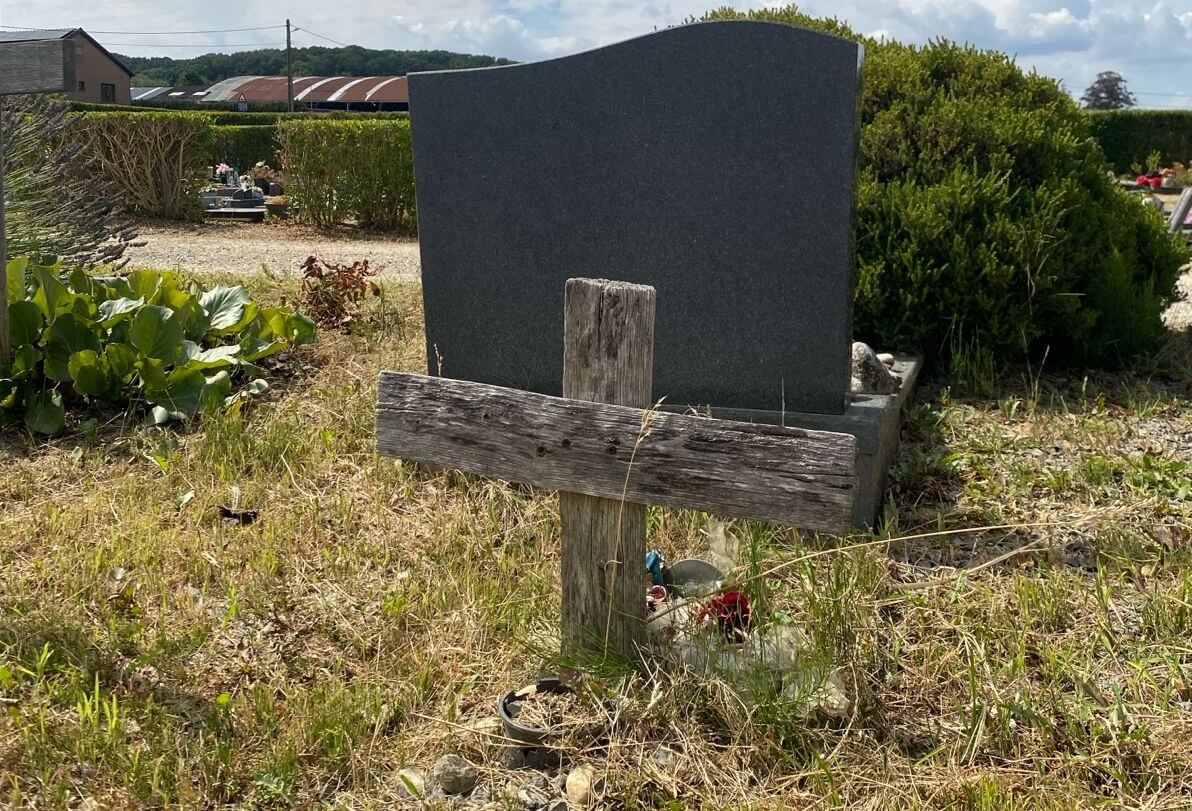
She was buried in the town cemetery under a small, weathered wooden cross with no name on it. Police reopened her case in 2023, and Interpol added her to its international Identify Me campaign as "the woman in the well." Still, no one has come forward.
Now there is a QR code at her grave. Scan it, and you can read what is known about her: where she was found, what she looked like, what she wore. Maybe someone recognizes a detail. A cardigan, a ring, a sister, neighbor or friend who simply stopped calling. Because for every nameless grave, somewhere, someone is still waiting.
👉 View the digital record of her grave
Every grave tells a story
NOMEN is Latin for "name." The project was started by Kurt Wertelaers, a former investigative journalist who founded Cold Case Bureau Van Meerbeeck. His goal: map anonymous graves, give the people buried there a voice again, and perhaps their name.
The scale is bigger than most people realize. Belgium has around 250 unidentified dead, the Netherlands about 500, and Europe as a whole thousands. In the United States, the problem is far larger. In 2007, the U.S. Department of Justice called it "the nation's silent mass disaster," with an estimated 40,000 unidentified remains. A 2004 federal study counted about 4,400 new cases a year, 1,000 of them still nameless a year later. Many lie in potter's fields under a number or simply "Jane Doe."
The idea behind NOMEN works anywhere. Every nameless grave gets a QR code that links to the person's story. A visitor who happens to walk by can supply the missing piece of the puzzle. The town of Holsbeek was the first in Belgium to approve placing such a code at an anonymous grave. The project aims to grow across Flanders, and well beyond it.
From trees to stories in public space
Plantsoon provides the technology and the QR labels for NOMEN. That may sound like an unusual step for a platform that started with trees and plants. But the core is the same: a label at a place in public space that tells the story behind it with a single scan.
"With Plantsoon, we started with trees and plants," says co-founder Roel Vanaelten. "More and more, our platform tells the story of other places too. The goal stays the same: connecting people with their surroundings. This project shows how far that impact can reach."
A QR code doesn't replace DNA labs or national databases such as NamUs. It adds something they can't: a story told right where people walk, in the one place a loved one might one day stand. Holsbeek is the first town to take part.